
The Reserve Bank of India (RBI) on Tuesday came out with a draft framework on declaration of dividend by banks, as it proposed capping dividend payout to shareholders at 75 per cent of their net profit-- also called profit after tax (PAT).

The Enforcement Directorate (ED) reports a decline in traditional financial crimes due to sustained investigative actions and government initiatives, while highlighting emerging challenges like cryptocurrency fraud and terror financing.

The Clearing Corporation of India (CCIL) will be able to reapply for recognition by the European Union's (EU) financial markets regulator following a pact signed on Tuesday between the Reserve Bank of India (RBI) and the European Securities and Markets Authority (Esma).

In 2023-2024, 95 scheduled commercial banks received over 10 million complaints from their customers. The process of KYC at many banks has become 'HYC' -- harass your customer, points out Tamal Bandyopadhyay.

The Directorate of Enforcement (ED) has launched a preliminary investigation or a pre-open inquiry into alleged violations related to the Foreign Exchange Management Act (Fema) in the Paytm Payments Bank case, according to sources in the know. The probe follows serious concerns raised by the Reserve Bank of India on multiple violations by the Paytm bank, which is a joint venture between One97 Communications, which is the parent company of Paytm, and the group's founder Vijay Shekhar Sharma.

Vijay, despite the loud message from his delayed arrival at the road-show/stampede venue, and more so his continued inaccessibility for fans-turned-cadres after graduating from a super-star to a political party leader with electoral ambitions, refuses to change. Or, so it seems, observes N Sathiya Moorthy.

The Nagpur bench of the Bombay high court has quashed the decision of Maharashtra Chief Minister Eknath Shinde to stay the recruitment process of a co-operative bank, noting that the CM has no powers to review or modify the calls taken by the minister concerned.

While banks are not as exposed as the corporate sector during the initial stage of the pandemic, the strain on lenders could ultimately be profound. Banks face a second-order hit compared with the corporate and household sectors.

These include Goldman Sachs, HSBC, UBS, Deutsche Bank, Barclays, RBS, Citigroup and JP Morgan and they have said in their respective regulatory filings that they are cooperating with the relevant authorities in the investigations.

Switzerland has been making efforts to strengthen its bilateral cooperation with India .

The RBI has changed the way it approached supervision in the past. Having seen a couple of collapses in the NBFC sector and the near-collapse of a few banks, it is focusing on regular drills to prevent a fire from breaking out, explains Tamal Bandyopadhyay.
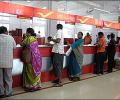
The staff at post offices misappropriated Rs 95.62 crore of public money between November 2002 and September 2021, the Comptroller and Auditor General has said. The money may seem small but it is what common citizen invested in post office savings, the oldest and the largest banking system in the country. The system serves the investment needs of urban and rural clients through schemes such as savings bank, recurring deposits, time deposits, national savings certificates, kisan vikas patras, public provident fund, monthly income account scheme, sukanya samriddhi accounts and senior citizens savings scheme.

'Whether I am optimistic or pessimistic is not the issue; I am just going by the evidence available.' 'The Indian economy and financial sector are now well-placed and very resilient in dealing with any kind of spillover coming from the external world.'

One97 Communications Ltd (OCL), the parent firm of fintech major Paytm, has denied reports about any investigation by the Enforcement Directorate (ED) into the company, its associates, and its founder and chief executive officer (CEO), Vijay Shekhar Sharma. The company, in an exchange filing on Sunday, said it had cooperated with the authorities when users or merchants on its platform were subject to enquiries in the past. "We would like to set the record straight and deny any involvement in anti-money laundering activities.

'Facilitating conversion of well-run NBFCs into banks is urgently needed.'

If the policy is extended to NBFCs and co-operative banks, they will have to disclose divergence in asset classification and provisioning during RBI inspections in their audited financial reports. Till now, these entities have been exempted from this. At present, there are more than 98,000 co-operative banks and 10,000 NBFCs. Sources said the RBI would concentrate on the top 50 co-operative banks and NBFCs.

RBI Governor Shaktikanta Das kept the red flag on cryptocurrencies flying, warning that the next financial crisis can be triggered by private cryptocurrencies if such speculative instruments are allowed to grow.

In mid-March this year, the finance ministry asked state-run banks to review their gold loan portfolio for the two-year period between January 1, 2022, and January 31, 2024. This business had grown at a fast clip. Reserve Bank of India (RBI) data has it that it grew 15 per cent to Rs 1 trillion in FY24. Now, in recent times, any kind of exuberance in financial services has seen the authorities swoop down - be it pushing the lines on governance or unsecured credit.

If indeed the gate opens for big industrial houses, the RBI needs to be smarter than them and demonstrate it through action, not reaction, observes Tamal Bandyopadhyay.

Penalty must act as a deterrent. If it is too low, it could encourage the regulated entities to lap up penalty instead of complying with the norms, suggests Tamal Bandyopadhyay.

To further strengthen the supervision on non-banking entities (NBFCs), the Reserve Bank on Tuesday issued revised guidelines on a Prompt Corrective Action (PCA) framework for such companies, excluding government-owned ones, effective from October 1, 2022, on the lines of what it had introduced for banks in 2002. The RBI came up with stricter supervisory norms under the PCA framework for banks after their bad loans mounted and balance-sheets bled badly. This involved restricting them from fresh lending, brand opening and, hiring, among others. The RBI said the revised PCA framework is also applicable to all deposit-taking non-banking financial companies (NBFCs), all non-deposit taking NBFCs in the middle, upper and top layers, including investment and credit companies, core investment companies, infrastructure debt funds, infrastructure finance companies and microfinance institutions.

RBL Bank is no Yes Bank. It's not fraught with fraud. It's a story of limitless ambition and greed for growth under a leader who doesn't want to give up, says Tamal Bandyopadhyay.

Has Vijay Shekhar Sharma given up on the bank? For now, he seems to be on a save-OCL mission. The bank will face its logical end, observes Tamal Bandopadhyay.

Why is the RBI harsh on Paytm Payments Bank? Why did it give Rana Kapoor of Yes Bank Ltd such a long rope?Often, it's a long investigation process, but the RBI doesn't discuss this openly since that can threaten financial sector stability, explains Tamal Bandyopadhyay.

The Reserve Bank on Thursday said it will come out with a framework allowing borrowers to switch to fixed interest rate from floating interest rate, a move that would provide relief to borrowers of home, auto and other loans reeling under the impact of high interest rate. Unveiling the bi-monthly monetary policy, Reserve Bank Governor Shaktikanta Das said under the framework, to be put in place shortly, the lenders will have to clearly communicate with the borrowers about tenor and EMI. "The supervisory reviews undertaken by the Reserve Bank and the feedback and references from members of public have revealed several instances of unreasonable elongation of tenor of floating rate loans by lenders without proper consent and communication to the borrowers," he said.

Isn't it time to review the 'fit and proper' criteria for banking licence, particularly with reference to individuals applying for it, asks Tamal Bandyopadhyay?

But other allegations against Jain, Deutsche Bank still being evaluated by the regulator
Historically, the RBI has tried to keep the crooks at bay by issuing a circular a day. What it needs is more onsite supervision. Merely checking high-frequency data with the help of technology is insufficient, notes Tamal Bandyopadhyay.

Without naming either the alleged kingpin of the fraud, billionaire jeweller Nirav Modi, or Punjab National Bank, Jaitley questioned the ethics of some businesses in the country and asked as to why the bank's internal and external auditors could not detect the fraud which had been going on for 7 long years.
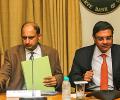
'Those who come from outside are surprised at the relatively small strength of the RBI supervisory cadre, relative to the needs of the country and the needs of the financial sector.'

'So far as supervision is concerned, there are enough powers but to take action on public sector banks, consultation with the government is needed.'

The PNB fiasco falls into a family line that involves non-fund limits - read contingent liabilities which are off-books. Harshad Mehta did it with bankers' receipts in 1992. Ketan Parekh exploited the ignorance of bankers who did not know the difference between a cheque and a pay-order. And the RBI blinked when it failed to insist the SWIFT platform be linked to the core banking solution. Raghu Mohan & Abhijit Lele trace the banking mess that was just waiting to happen.

The choice clearly is between prompt corrective action and slow but sure destruction, says Tamal Bandyopadhyay.

The further expansion and upgrade of the Chinese military does not augur well for India, which continues to confront an increasingly belligerent China on its borders, notes former foreign secretary Shyam Saran.

Tamal Bandyopadhyay details HDFC Bank's digital journey.

'The Reserve Bank's independence has remained a work in progress, an enduring challenge that the nation has been grappling with on an ongoing basis,' says RBI Deputy Governor Dr Viral Acharya.

The Supreme Court had observed that issues of national economic interest; disclosure of information regarding currency or exchange rates/interest rates/ taxes; regulation or supervision of banking, insurance and other financial institutions; proposals for expenditure or borrowing, and foreign investments, could all, in some cases, harm the national economy, especially if released prematurely.
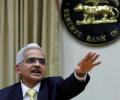
If the new governor can think out of the box even as he signals that he can bat for the RBI cadre and respect its institutional memory, that will go a long way in getting out of the current impasse.

Indian regulators have identified certain groups as 'financial conglomerates' and they are being monitored closely for any systemic risks they may pose.
